Digital Nomad Dream - Dead, Harder, or Just Too Expensive

I got my start in SE Asia back in 2011 as an English teacher.
I met a a Thai girl in America who was an exchange student and she moved back to Thailand. Because I wasn't too happy with working 60 hours a week in Connecticut, I figured why don't I go to Thailand with her
So I went with the intention of being in Thailand as a teacher for 1-2 years. I could always come back to America. Side note, avoid the teacher trap.
It’s funny how the labels keep changing
When I first came abroad, I was a young guy traveling the world.
It was still not a normal thing to do even in 2011 so I got a lot of interest from people as on the what, why and how as to what I was doing.
Then all of a sudden I was a digital nomad circa 2016 or so, and now I guess I’m a passport bro (I'm not as it's been co-opted by loser sexpats). I like how people keep making up new terms for simply being an expat.
So I want to cover whether the digital nomad dream is dead, whether it’s getting harder, and what I think about it all.
For context, I’m not someone with a remote job. I’ve been self-employed and living abroad the whole time, so this is my perspective from that side.
Freedom Mattered Most to Me
I’ve always found the term “digital nomad” a bit cringe, and a little silly in how people aspire to it.
I’ve always been motivated by freedom. Once I went abroad, I loved the lifestyle and didn't want to pack-up and get another 60 hour+ corporate job in America.
My original plan was to teach English for about two years and then go back to America, since my background is in accounting and finance. I figured I’d get a job at an accounting firm or a financial services firm.
But I enjoyed being abroad so much that I started looking for a way to make real money without being an English teacher earning a modest salary each month. It took me a few years to make that leap.
Figure Out Your Income Source First is Step 1
My advice for anyone who wants to be a digital nomad is to figure out your thing. You need an online income source you can rely on, and ideally several, not just one.
I wouldn’t want to be a remote worker abroad. That’s also getting harder, because companies are less willing to let you take off and live in say Bali than they were in 2021 or 2022.
Imagine building up your life abroad and then all of sudden the rug get pulled out from under you.
Finding your own thing takes time a long time, and I won’t pretend it’s easy. It took me years to get to a few thousand a month online, to the point where I could live abroad and not need to be an English teacher anymore.
Here is what I’d tell anyone starting out:
- Figure out an income source.
- Free up your time in some way so you can work on that income source.
- Be ready to fail. You’ll spend a lot of time trying different things that don’t work.
By freeing up your time, I can look back and be thankful I was an English teacher because I actually had time to try things.
Through trying things, I failed and failed and failed until I figured out something that people wanted, were willing to pay for and I was good at.
 Edge of David
You Have to Provide Value
It’s a cliche, but you have to provide value to other people. Take someone like Chris the Freelancer.
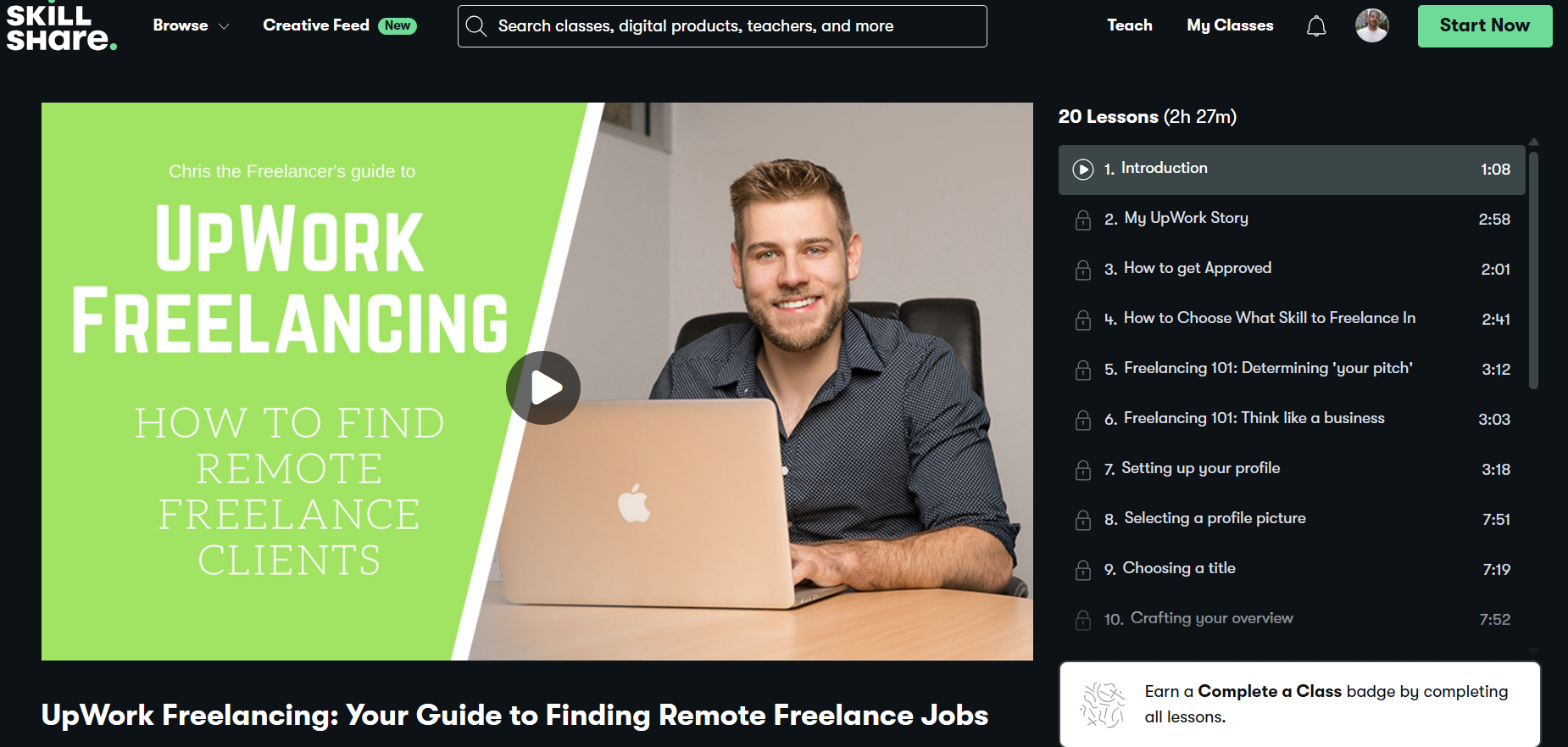
He has a lifestyle brand, much like I do with Edge of David, where he covers fun stuff in Bali. Work spaces, amazing cafes and restaurants or run clubs you should checkout.
But he makes his money that affords his lifestyle from coding tutorials for Shopify, teaching on Skillshare, and doing courses, services, and freelance work. The lifestyle brand is the fun thing on the side.
It’s the same for me, Edge of David is my fun thing
Between YouTube ad revenue, course sales, and vault sales, I make a few hundred dollars a month from this side project. It's a solid side income, but I would be STRESSED OUT if I was trying to rely on this.
First, travel content doesn’t pay much on YouTube. It’s fun and entertaining, but it’s very me-me-me centric, and it doesn’t solve a problem for anyone.
There are always exceptions, like Lost LeBlanc, who is a multi-millionaire and makes great videos, or influencers like Sam Tyler in Thailand who are doing well.
But most people who want to make travel content never make it because vlogging is generally a piss poor marketing strategy.
To pay the bills, you need a skill set that you translate into the online space in some way, and you use it to solve real-world problems and provide tangible benefits to your customers.
The Visa Situation
The visa topic has come up on my feed from a few different creators, which is part of what inspired this post.
People keep saying that visas in Thailand are getting strict. I can tell you that Thailand has always been Thailand.
This is not a new thing.
Thailand has never really wanted people living there long term
It has always been a bit challenging to stay for more than a year, unless you’re married, working a job where you have a work permit, or retired.
If you don’t fall into one of those three categories, long-term stays have always been difficult.
Even the DTV visa, which looked like it would let people stay long term, has caused trouble for people when they leave and try to re-enter. That makes sense when you consider that immigration and the office that issues visas are separate organizations that don’t talk to each other, which is why those conflicts keep happening.
As for Bali and Indonesia (since Chris the Freelancer and Joose the Nomad live their), they don’t want you showing up on a tourist visa and running a tour group, yoga retreat or working as an influencer for places in Bali.
It's fine if you have your own remote income and work so long as you're not working in the country for companies in said country.
I find it funny how surprised foreigners are that your visa limits what you can do. If you’re in Thailand on a tourist visa, you can’t suddenly start reporting the news or filming a protest once the Thais have one of their famous political red shirt/yellow shirt fight again..
Not to be rude but you’re there for tourism idiot... that's the purpose of your stay according to your visa.
I can't just announce a trip to Son Doong Cave and charge people to join me. So group trips you see from influencers do exist, but they do violate the point of select visas, namely the tourist visa.
So in my opinion, the visa situation hasn’t really gotten stricter in certain places. You just have to abide by the rules and those rules in certain places are more enforced now than before.
So have a proper remote income, and don’t do work in the country that your visa doesn’t allow.
Are Places Becoming Expensive and Overrated?
Juice the Nomad has talked about this in relation to Da Nang, and I agree and disagree with him.
Certain places have definitely become much more popular. Canggu in 2015 and 2016 had gorgeous rice fields. Go there now and it’s all built up and super gentrified.
Da Nang has also become far more popular, since everyone on YouTube keeps talking about it.
Where I disagree is that there are still good places that aren’t super popular, because people don’t talk about them. Low cost of living and a good remote place to work do exist. I made a video on Siem Reap because I was blown away by it.
I could see rolling up there with my girlfriend and living there for six months with no problem. It’s a bit boring and there isn’t much to do, but it’s beautiful, with cafes, bars, and Pub Street.
So there are still very underrated places. It’s a trade-off, though, because part of what’s fun about being abroad is living where there are other people and activities going on.
That’s why people gravitate to Bali so much. Because it's developed, comfortable and has the required amenities for online work.
Authentic vs Expat Bubble
Some want the authentic culture, and they’ll call certain neighborhoods an expat bubble. I get that.
If you’re in Bali, unless you're willing to live in the center of the island where the locals are, it's one of the most gentrified places I've ever been.
Remote workers value comfort and convenience as a way to be productive which is why I don't judge. People want to live in work in Canggu Bali because of cafes, gyms, food and networking.
Not in the middle of nowhere in the center of the Island.
Last, Constantly Traveling is Overrated IMO
Finally, I want to talk about the classic idea of being a digital nomad, jumping around from place to place. I think that’s overrated too.
I’m in my 40s now, and I was in my 20s once. Back then I was working as an auditor at Price Waterhouse Coopers, reading Colin Wright’s blog, Exile Lifestyle.
He made money from books, websites, and his freelance work, and he’d move to a new country every four months based on his audience.
I was so envious as I was in an office building all day in Hartford Connecticut. I thought it was the coolest thing what he was doing and I wanted in
Now that I’m on the other side, with the ability to do that if I really wanted to, I can tell you it’s completely overrated.
Picture telling my girlfriend, “Sorry babe, I’m off to the Philippines for four months, have a good time, see you whenever.”
Look, I like having a routine and a gym. Less thinking and planning and more doing.
More than anything, I like having a group of friends to hand out with and a girlfriend, building a life somewhere, and having stability instead of bouncing around.
That idea is probably more appealing when you’re younger
I prefer having a home base and to travel from there, while you take care of your emotional aspects of needing friendship and a romantic connection with someone and eventually family formation.
Final Words
So is the digital nomad dream dead? I don’t think so. The dream of freedom and self soverignty is alive and well, in fact it's the new American dream as far as I can tell.
What has changed is that remote jobs are harder to come by, and the real work is building multiple income sources you control. Do that, abide by the visa rules, pick a place where you can be productive, and consider settling down somewhere instead of always moving.
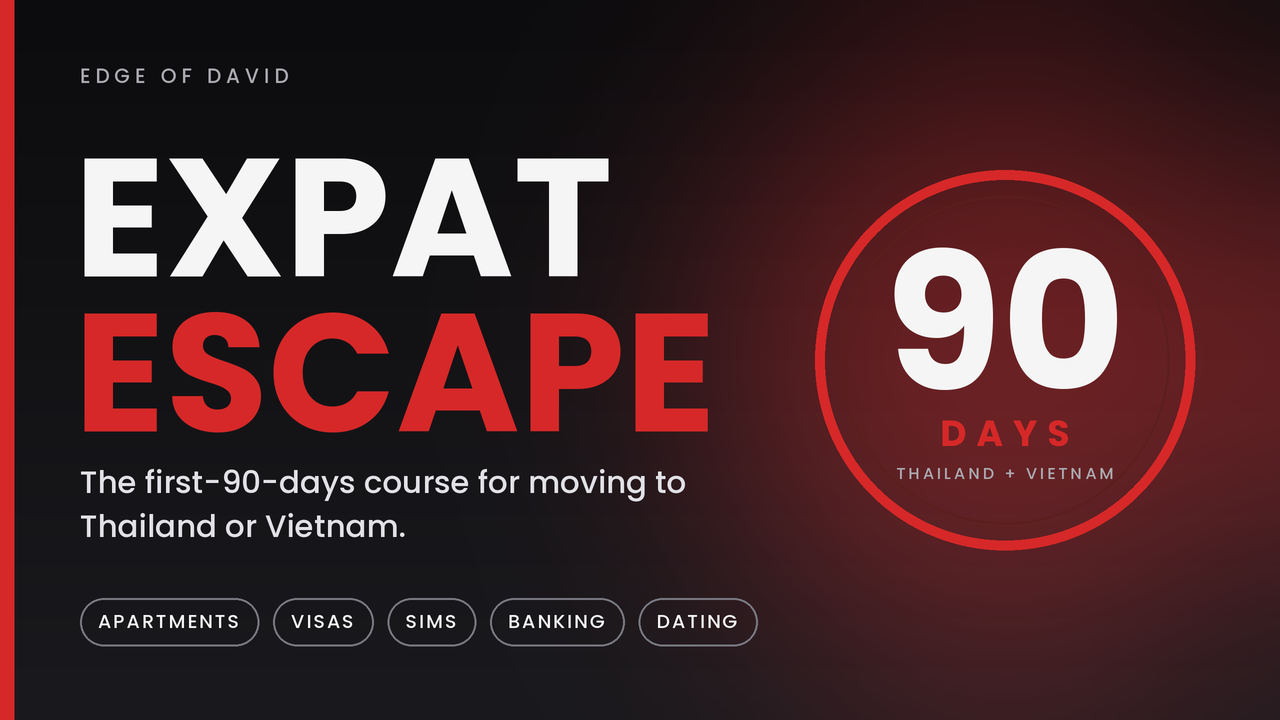
EXPAT ESCAPE
Expat Escape is the course I wish I'd had when I started. I've been an expat since 2011, having lived in both Thailand and Vietnam for years (not months). This is what I'd tell a friend who asked me, "How do I actually do this?"