You Never Get Away With Anything...
My favorite idea from Peterson that I personally had to learn the hard way (of course).

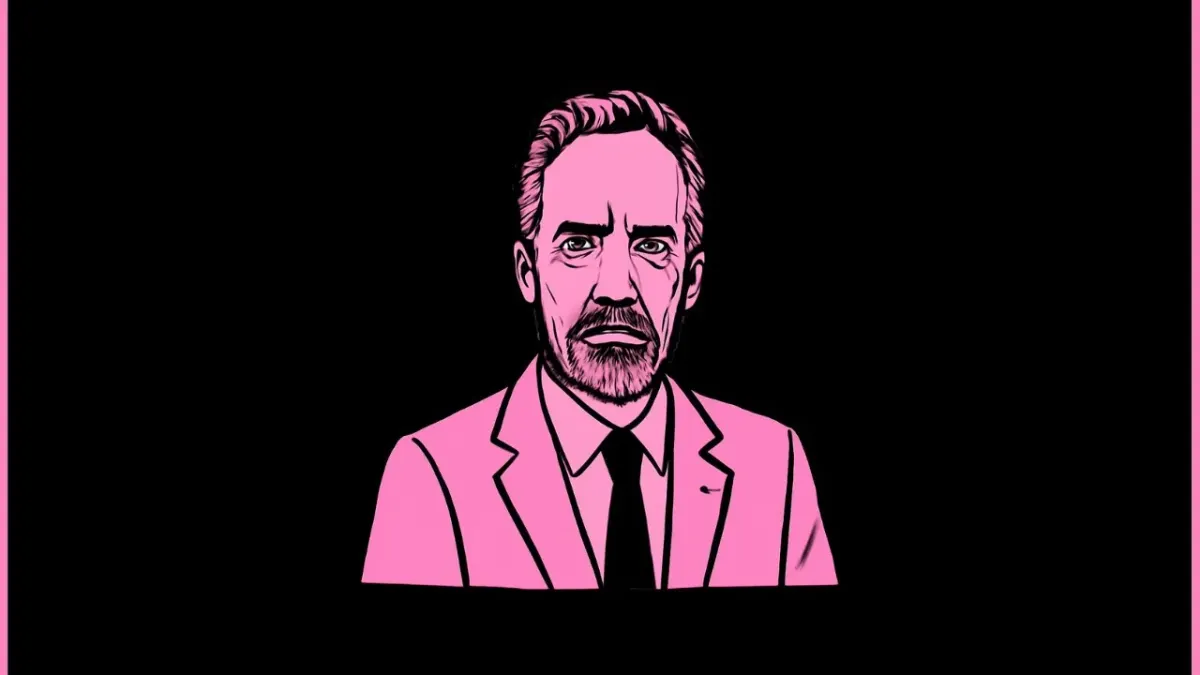
It's true, weird and in fact kind of scary. You never get away with anything.
Ever.
We all broadly know this. If you're a deceptive person who cuts corners when it comes to your business dealings, eventually you're going to get found out.
Like, duh, no surprise here.
But with regards to cheating in a relationship, or perhaps a test for school, lying to yourself about why you did not go to the gym or just fundamentally not doing what you said you were going to do, we rationalize it away.
Peterson isn't making a purely metaphysical claim about cosmic justice, at least not in this context.
He's making a psychological claim about personality integration.
The proposition is that you have to organize the self in a non-contradictory manner, or you feel negative emotion.
It's a structural requirement of how the self holds together.
Why contradiction of self costs you (at some point)
Think about a line of people passing rocks down a row to fill a hole.
If one person tries to make the rocks go the wrong way or drops them, the whole structure stops functioning, because there's an internal inconsistency in it.
Peterson treats the self the same way.
He frames this as following the principle of non-contradiction, the idea that a thing can't be itself and something else at the same time, applied to the organization of your own self.
So when you lie, manipulate, or act against your own conscience, you're not just doing something "wrong" in an abstract sense.
You're introducing a rock going the wrong way into your own internal chain.
Something has to give.
The escape hatch, and why it doesn't work
The obvious objection to all this is why can't you just rationalize your way out of this?
Reframe the narrative so the contradiction disappears? Pain becomes infinitely malleable depending on the narrative you weave around it right?
Well his answer is nooooooo, not really, because there are characteristics of experience that have a "non-textual phenomenology."
Pain isn't purely textual
He backs this with the dog example.
If you hit a dog on the nose with a newspaper every time it goes to eat, it will learn not to eat, effectively transforming hunger into anxiety until it starves.
Even something as fundamental as hunger can be modulated by learning, but there are limits to that modulation.
Narratives can bend biology, but not infinitely.
You can talk yourself into almost anything short-term.
Long-term, the underlying structure pushes back at some point.
Performative contradiction: the embodied lie
When you say one thing and do another, philosophers call this a performative contradiction, a form of lie.
Peterson describes it as an embodied lie, because Rogers (whose framework he's building on here) treated embodiment as central to being human.
The representational structures you build for yourself have to account for the realities of your underlying biology.
"Narrative excuses"
You can construct a story that justifies your behavior to yourself.
But your body and your unconscious aren't reading the story.
They're responding to the actual contradiction between what you claim and what you do.
Why you can't just "get away" with it
The result is that you can't escape the consequences that easily.
Contradictions accumulate as you move forward, and those contradictions destabilize you, either in a minor way or a deep way.
This is the mechanism, not metaphor.
Every act of self-deception or manipulation is a small structural crack. Enough cracks and the whole personality starts to shake.
Depth of pathology tracks level of abstraction
Here's the part that explains why some lies wreck people and others barely register.
Peterson ties this to a hierarchical structure: the higher the level of abstraction you mess around with, the more of your personality you pathologize.
A small lie about something trivial corrupts a small part of the system.
A lie about your identity, your values, your fundamental orientation to the world, corrupts everything downstream of it, because everything downstream depends on that higher-level node being honest.
The Rogerian presupposition
The underlying presupposition here is that honest integration matters.
Peterson admits this is philosophically contestable, people have debated it forever, but then he pivots to clinical experience.
As a therapist, working with thousands of clients he's never seen anyone get away with anything.
Every time you do something you know isn't right, you get walloped for it sooner or later.
This is where your "karma" framing lands correctly.
It's not woo woo nonesne, it's clinical observation dressed in psychological language.
He's not saying the universe punishes you mind you.
He's saying the personality punishes itself when it's internally inconsistent.
Why you might not see the connection
You can blind yourself so badly through misapprehension and self-deception that you can't see the causal connection between what you did and the punishment.
Sometimes it takes years of psychotherapeutic investigation to lay out that causal narrative.
This is why the consequence doesn't feel like "getting away with it" is false in the moment.
The gap between the act and the collapse can be huge.
That gap is exactly what makes rationalization feel like it's working, right up until it doesn't.
The plastic ruler
Peterson's image for this is a plastic ruler held in front of your face and bent forward.
That's fine, as long as you hold it.
The moment you let go, it snaps back and hits you.
You bent reality to suit you temporarily. Reality was never actually reshaped.
It was just deformed under pressure, storing that energy, waiting.
What this is NOT saying
Peterson isn't claiming external material consequences are guaranteed or immediate.
He explicitly separates this from the existentialist claim about ordinary life suffering.
For Rogers, actual pathology wasn't the plain suffering everyone deals with, it was the contradictions that arise specifically because people fail to use their capacity for honest articulation in a way that keeps them integrated.
So the claim is narrower and more precise than "bad people always get caught."
It's internal contradiction is corrosive to personality structure, and that corrosion is functionally inescapable even when the external world never catches up.
The psychopath who "gets away with it" materially is still, on this model, running the corrosion internally.
Looking at poor long-term outcomes, emotional collapse, low resilience, elevated suicide risk, is the empirical evidence for that internal cost showing up even when nobody else ever notices the original lie.
Put simply...
A personality built on contradiction is like a ruler bent past its resting shape.
It doesn't matter whether anyone is watching.
The tension is already stored in the material, and it will express itself, either as neurotic collapse from within or consequence from without, and usually both.
So should one do and not do based on all this?
Do
Say what you mean, even in small things. The model isn't just "don't commit fraud." It's that every small performative contradiction, saying yes when you mean no, pretending to agree when you don't, counts. Small honesty in daily interactions is cheap. It's practice for not accumulating cracks.
Let your actions and your stated values match, especially when no one's checking. The plastic ruler doesn't know if anyone's watching. It just bends and stores tension. So the test isn't "will I get caught," it's "does what I'm doing line up with what I actually believe."
Deal with contradictions as they show up, not after they pile up. Peterson's point is that you will encounter contradictions constantly, that's unavoidable. The task is to metabolize them as they come rather than let them stack. A single unresolved lie is manageable. Ten years of unexamined ones is a different problem entirely.
Watch the level of abstraction you're lying at. A white lie about being busy is low stakes. A lie about who you are, what you value, what you're actually building your life around, that's high stakes, because everything else in your personality is downstream of it. If you're going to be ruthlessly honest anywhere, prioritize the identity-level stuff over the trivial stuff.
Get external feedback loops running. Since self-deception can blind you to the causal chain between your behavior and your suffering, and it can take years of therapy to untangle it, the practical move is to build in people or processes that catch your rationalizations before they calcify. A good friend, therapist, mentor, journal, whatever, something that makes you say the contradiction out loud.
Expect suboptimal solutions and don't punish yourself for them. He's explicit that Sophie's Choice situations exist. Sometimes there's no clean answer. The standard isn't "always find the optimal path," it's "don't lie to yourself about the tradeoff you made."
Own the choice honestly rather than constructing a narrative excuse for it.
Don't
Don't out-argue your own conscience. The postmodern move, constructing a sophisticated enough narrative to dissolve the contradiction, is explicitly the trap. If you're working hard to justify something, that effort itself is a signal.
Don't confuse "no immediate consequence" with "no consequence." This is the whole ruler metaphor. The absence of external punishment isn't evidence you got away with it. It just means the release hasn't happened yet, or it's happening internally as neuroticism instead of externally as material loss.
Don't assume low empathy or high intelligence protects you. Peterson's specific point about psychopaths is that even people skilled at constructing self-serving narratives still tend toward collapse, because the narrative eventually stops being commensurate with the rest of the personality. Cleverness delays the reckoning, it doesn't cancel it.
Don't treat this as a reason for self-flagellation over every ordinary struggle. Rogers draws a real line between plain suffering, which is unavoidable and not pathological, and the suffering that comes specifically from unnecessary self-contradiction. Not every hard feeling is evidence you're lying to yourself. The target is the avoidable stuff, not the human condition in general.
Keep your word to yourself
Not because a cosmic ledger is watching, but because the self doesn't function well when it isn't internally consistent, and that malfunction is the punishment and you'll notice it most in patterns that repeat and repeat.
 Edge of David
More? More! 👇

The Chemistry of Attraction
Learn how to have choice in love, dating & relationships