Savers vs Investors (Don't Get Left Holding the Bag)


So Elon Musk just became the first trillionaire on the planet. Within hours, half the country called it a crime. Bernie Sanders called it theft from the working class.
That same weekend, a SpaceX welder named Juan Hernandez was sitting on over a million dollars...
Not because he was an executive.
Not because he had some sort of insider knowledge.
It's because he held stock in the company he worked for, and he let it ride to the moon (pun intended).
That contrast tells you everything about how wealth actually works in the USA.
The real divide in our economy isn't Elon and the elites versus everyone else. It's savers versus investors and right now, savers are losing by design.
Cash Is a Losing Position
In the last six years, the dollar has lost about a third of its value.
For every dollar the government collects in taxes, it spends a $1.58.
It covers this gap by printing money, and that money has to come from somewhere.
That somewhere is the purchasing power sitting in your savings account that's probably only earning .03%.
If you hold cash, you lose - guaranteed
Every year, every dollar in your savings account buys a little less than it did the year before.
The end result is we all have to work harder and harder for a dollar worth less and less.
A full time job, a side gig, credit cards. All just to barley keep up.
We should be living a world of abundance, where we all work 20 hours a week (they thought this in the 1970's). But because we live in a parasitic financial system that steals from savers and syphons productivity gains to the top instead of being fairly distributed, we're all stuck having our time and energy stolen from.
So the only way not to lose in our unfair inflationary system is to get out of dollars and into assets.
Bitcoin - The Cooperation Technology
How a prosperity protocol creates a fairer future and why waiting is no longer an option.
Stocks, real estate, Bitcoin, Gold
Anything that tends to rise with inflation rather than get eaten by it. This isn't even optional anymore if you want to preserve your buying power or better, grow it.
You can't save your way to wealth.
This single fact forces tens of millions of people into the stock market whether they fully understand what they're doing or not.
Why the Scrooge McDuck "Vault" Image Is Wrong

I think this is obvious but I'll state it anyways. Elon Musk doesn't have a trillion dollars sitting across multiple bank accounts.
Almost all of that number is the theoretical value of shares in companies he owns. Those shares are only worth something because other people want to own a piece of what he built.
If people stop wanting the shares, the number drops or disappears entirely.
A net worth tied up in equity isn't a hoard, it's a scorecard. It tracks how much value people believe someone has created.
The welder at SpaceX understood this. He had pre-IPO SpaceX shares, and he let their value compound instead of cashing out the second he could.
The Trade Nobody Talks About
Here's the part that gets skipped in most takes on inequality: labor and equity are not the same bet, and they're not supposed to pay out the same way.
An engineer at a big AI company making seven figures a year collects that check whether the company succeeds or fails.
The welder at SpaceX gets paid whether the rocket flies or the company goes bankrupt. Wages come first, and they come with a guarantee.
The person holding equity gets paid last
If the company fails, the shareholder is the one who gets wiped out. That's the actual trade.
You get the upside because you accepted the downside.
Elon's own compensation package pays out nothing unless he is absurdly successful. Zero, until the company performs. He only wins if every other shareholder wins too.
That asymmetry is the entire logic of why ownership pays more than labor over time. The risk has to go somewhere, and the people who take it on are the only ones entitled to the reward when it works out.
Juan Did Two Things, and So Can You
Juan made himself more valuable through skills because he learned to weld.
That's it.
A real, marketable skill that companies were willing to pay for.
Not life coaching, not lecturing everyone on how to be "authentically you." Not avoiding the difficult work of actually working by hiding away in your masters program.
Second, he became an owner.
He wasn't some savvy investor who saw SpaceX coming from a mile away. By his own account, he didn't even fully understand what the company did when he took the job.
A friend told him about the welding position, and he took it. The ownership stake came as part of the job, not from some genius bet (though he was lucky that the company did this, most workers get no stock as part of their job).
The part that actually mattered came after that. He didn't sell the second he had the chance.
He held on while the stock grew in value, even though holding meant carrying more risk the longer he waited. The only time he sold any shares was to fund his own business. That patience, more than any insight or luck, is what turned a welding job into a seven-figure net worth.
Learn a skill people will pay for
 Edge of David
Take ownership when it's offered and hold it. If it's not offered, then open up a brokerage account and start buying your way in.
Stop Blaming the Wrong Thing
A lot of the anger directed at billionaires and now a trillionaire treats wealth as something stolen from regular people but the math says something different.
Take away the deficit spending and the money printing, and Elon doesn't hit trillionaire status, even with all the same hype, subsidies, and value creation.
The raw inflated dollar figure is mostly a function of currency debasement, not some sudden theft from the public.
The money is being debased. The federal debt keeps growing
There are real distortions worth fixing, like loopholes that let people borrow against stock instead of selling it to avoid paying taxes.
Yea, you read the right. Especially once your stock portfolio is over 100K. You can borrow against your portfolio (or Bitcoin, but the rates again your portfolio are WAY more favorable at the moment), and pay no taxes because that money is not technically income.
You can take that money and then buy more assets, invest it in something that generates cashflow, or roll the loan forward as the underlying asset grows and take out a new loan (just keep the LTV to 15-20% and you can almost do that forever).
Spending problem at the government level, savings problem at the personal level
Saving in a currency that's losing value every year is a losing strategy no matter who you are or how the system gets reformed.
Think about it, if money is supposed to be valuable, why does it not grow in value over time or at the very least maintain its value?
You should just be able to save your money and retire when you have enough, yet you can't because you don't know what "enough" is and are instead forced out onto the risk curve though investing.
Save in Bitcoin
With Bitcoin you can actually save your way to wealth wealth because of it's superior properties. Look, I live abroad. I convert my USD into Baht or Dong or Ringgit when needed.
I don't hold dollars and think I'm going to "take profits" and sell my USD for Mexican Pesos or Baht or VND or Ringgit.
You hold the strongest money and that is Bitcoin.
Divisible, highly portable, can't inflate it, can own and control it and can verify it's authenticity (try that with a gold bar).
Bitcoin - The Cooperation Technology
How a prosperity protocol creates a fairer future and why waiting is no longer an option.
The Only Move That Actually Works
If you want a system with no inflation and no forced choice between saving and investing, that's a fair thing to want.
Vote for it.
Push for a balanced budget and a move to sound money.
Until that happens, there's only one way to not get steam rolled by the system as it currently exists: invest in assets and stop treating cash savings as safety.
Safe isn't safe, it's a slow bleed
The welder at SpaceX didn't need permission, connections, or a lottery ticket.
He acquired a skill someone would pay for and had the long term patience to hold an ownership stake instead of trading it for a quick buck.
That combination is still available to you.
The game has flaws and it's not close to fair
But understanding the actual mechanism, savers losing automatically while investors at least have a shot, is the difference between staying angry at how unfair our system is (and it is) and actually playing the game and winning.
More? More?
 Edge of David
If you enjoyed this, I suggest checking out my book where I give my answer to the question, "what is money" 👇
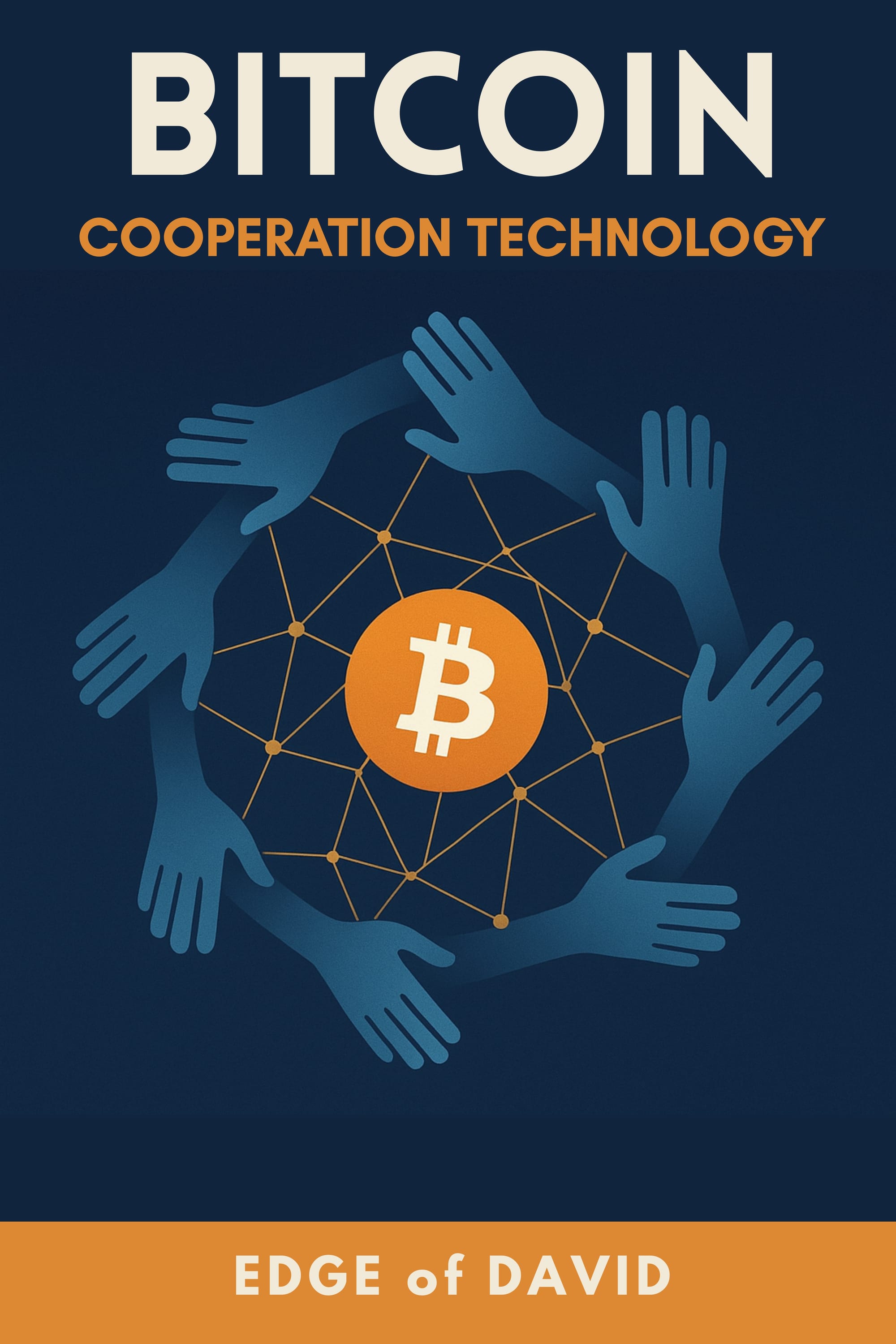
Bitcoin - Cooperation Technology
My answer to the "what is money" question. I break down why you need to adopt Bitcoin now for a prosperous future.